
Wiring That Supports Real Household Demands
Electrical services in Ardmore for homes with outdated wiring, overloaded circuits, or lighting that no longer meets daily needs
McCarley Services handles residential electrical work in Ardmore for homeowners who have noticed flickering lights, tripped breakers, or outlets that no longer function reliably. These are not cosmetic issues—they indicate that the existing electrical system is being asked to carry more than it was originally designed to handle. A proper evaluation identifies whether the problem originates at the panel, along a specific circuit, or at the device level, and that distinction shapes everything about how the work proceeds.
Residential electrical work at McCarley Services covers the range of practical needs that come up in everyday home use: adding or repositioning outlets, upgrading lighting fixtures, running new circuits for kitchen appliances or outdoor spaces, and replacing components that have worn past safe operation. Older homes in the Ardmore area were commonly wired before the widespread adoption of modern load standards, meaning the original panel and circuit layout may not reflect how the household actually uses electricity today. Identifying those gaps is part of the initial assessment before any work begins.
Describe your electrical concerns to McCarley Services and request an on-site estimate to review what your system currently supports and what changes would address the problem.
How Electrical Work Is Scoped and Completed
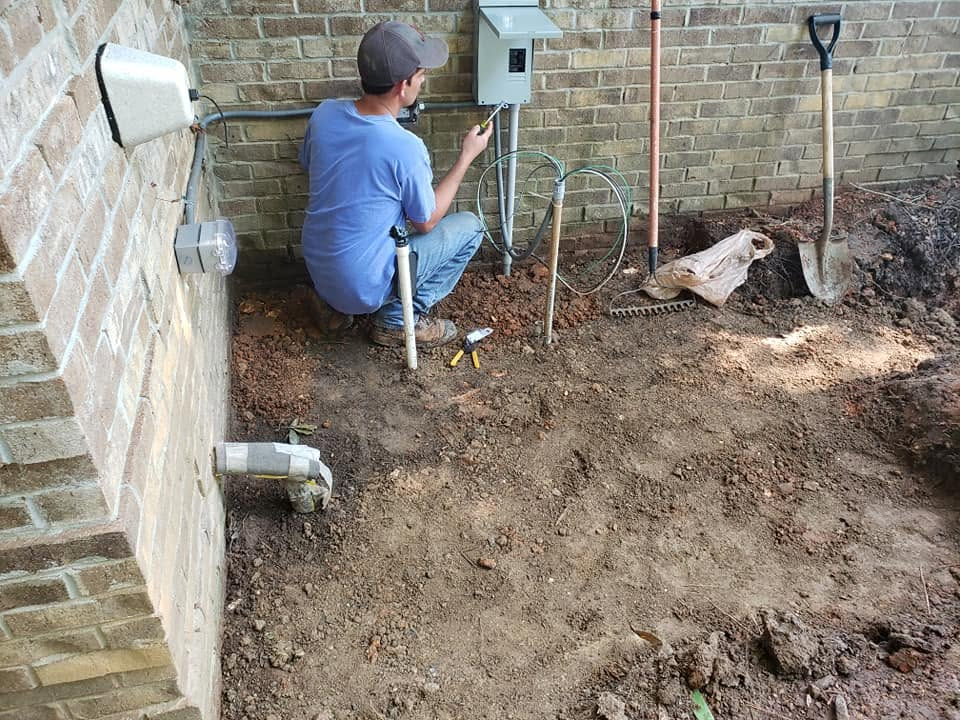
The distinction between a repair and a new installation determines not just the cost but the sequence of work, the materials required, and in many cases the permitting involved. Replacing a faulty outlet or breaker is a targeted repair—localized, fast, and requiring no structural change. Running a new dedicated circuit for a kitchen appliance, a home office, or an outdoor receptacle is an installation that involves planning the route, selecting wire gauge appropriate to the load, and connecting at the panel. Each type of work follows its own set of code requirements, and licensed electrical work means those requirements are met at every step.
Once the work is completed, what you notice is specific and measurable: lights that hold steady brightness without flickering, breakers that stay set during normal use, and outlets that deliver consistent power to the devices connected to them. Outdoor lighting circuits, when added correctly, operate independently of interior load so that using patio or security lighting does not affect the circuits inside the home.
What the service includes is the electrical work itself—wiring, devices, panel connections, and any required inspection coordination. Structural modifications such as drywall patching after wire runs are handled separately and should be discussed during the planning conversation so the full scope of the project is understood before work begins.
Common Questions About Residential Electrical Work
The questions below address how electrical work is actually performed and what homeowners can expect during and after the job.
What is the difference between repairing an existing circuit and installing a new one?
A repair addresses a fault within the current wiring—replacing a failed device, correcting a loose connection, or swapping a breaker that no longer trips correctly. A new installation adds capacity that did not previously exist, which requires routing wire, sizing the circuit to the intended load, and connecting at the panel under applicable code requirements.
How does an electrician determine whether a panel upgrade is necessary?
The assessment looks at the panel's rated amperage relative to the total connected load, the age and condition of the breakers, and whether the existing circuits have adequate capacity for current and planned use. Panels in homes built several decades ago were often sized for appliance loads that are now considerably lower than what a modern household draws.
What should you do before the electrician arrives to make the work go smoothly?
Clearing access to the electrical panel and to any walls, ceilings, or fixtures involved in the work reduces the time spent on-site. If the work involves specific outlets or lighting locations, noting exactly where you want them before the appointment prevents mid-job changes that extend the schedule.
Why does wire gauge matter when adding a new circuit?
Wire gauge determines how much current the conductor can safely carry without generating excess heat. A circuit running a refrigerator, dishwasher, or air handler requires heavier gauge wire than a standard lighting circuit, and using undersized wire on a high-draw device is a documented cause of electrical fires.
What does a completed outdoor receptacle installation look like in terms of code compliance in Ardmore?
Outdoor outlets installed in residential applications require weatherproof covers and GFCI protection, with the receptacle mounted at a code-specified height above grade. The circuit feeding them must be sized for the intended use, and in most cases the installation is inspected before the circuit is energized for regular use.
McCarley Services works with homeowners to identify what their electrical system currently handles and what additions or repairs would bring it in line with actual household needs. Contact McCarley Services at (256) 431-8917 to schedule an on-site assessment and discuss the specifics of your project.