
Outdoor Spaces Built to Hold Their Shape
Hardscaping in Ardmore for yards with sloped ground, undefined gathering areas, or surfaces that wash out under regular use
A patio or walkway that settles unevenly, develops low spots, or breaks apart within a few seasons is not a material problem—it is a preparation problem. McCarley Services approaches hardscaping in Ardmore by treating surface and base preparation as the work that determines how long every visible element performs. The decorative finish of a patio matters less than the compacted base beneath it, and that sequence of priorities is what separates durable outdoor features from ones that require repeated attention.
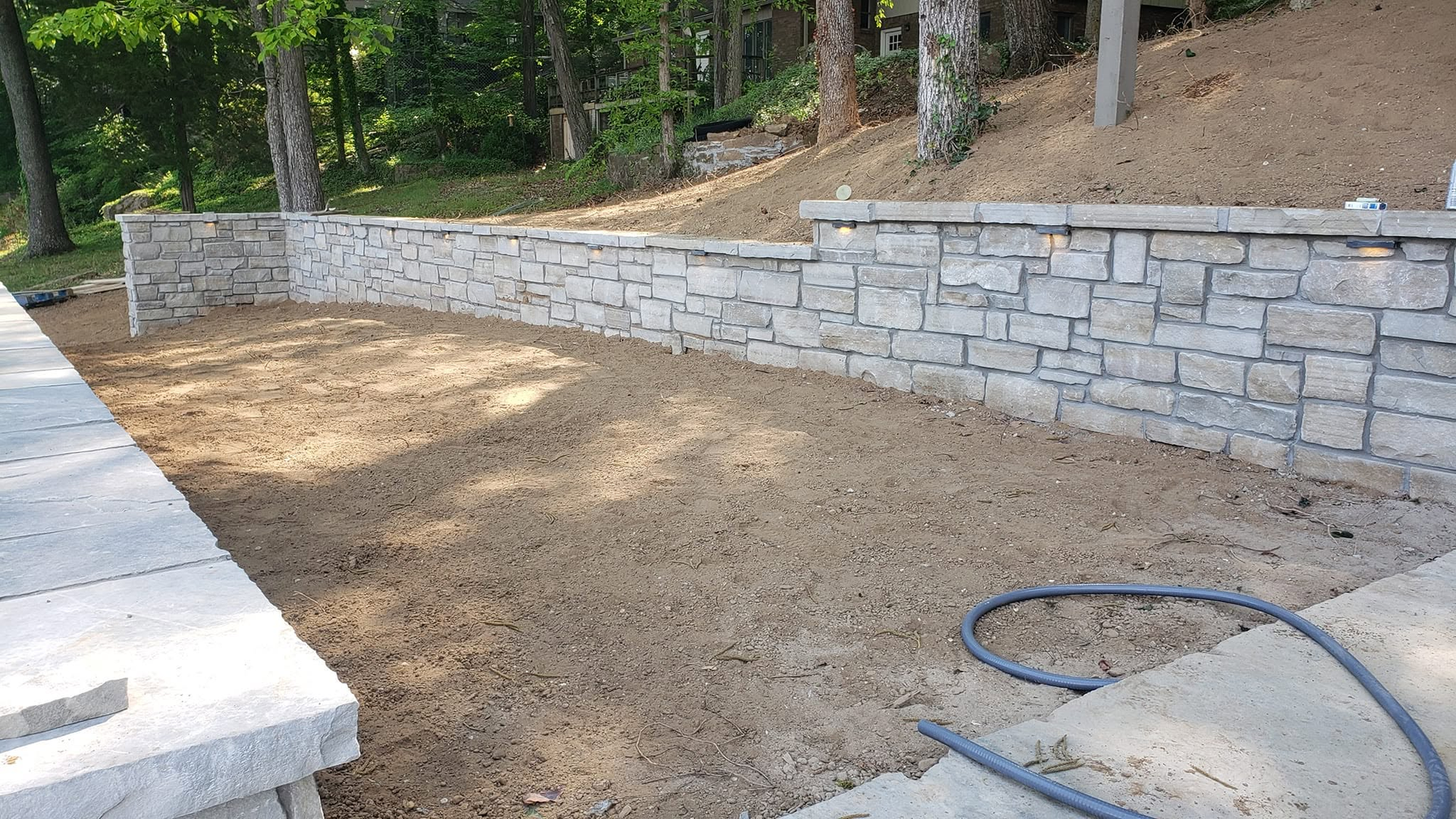
Hardscaping covers the built elements that give an outdoor space structure: patios for gathering and furniture, walkways that connect areas of the property cleanly, and defined edges that keep planted areas from encroaching on usable surfaces. In yards with grade changes—common in the rolling residential lots around Ardmore—hardscaping also plays a functional role in managing how water moves across the property. A well-positioned patio or walkway can redirect surface flow away from foundation areas and toward drainage routes rather than allowing it to pool against the house.
Connect with McCarley Services to plan a hardscaping project around the specific layout and grade of your property.
What Material Selection and Layout Actually Determine
Material choices in hardscaping are not purely aesthetic. Concrete, natural stone, brick pavers, and gravel each behave differently under load, moisture exposure, and foot traffic, and each requires a different base preparation and edge treatment to perform correctly. Pavers, for example, need a sand-set bed over compacted aggregate, with edge restraints that prevent individual units from migrating outward over time. Poured concrete requires proper joint placement to manage cracking, and the slab thickness must match the intended use—a pedestrian walkway is not engineered the same way as a surface that will support vehicle weight.
After installation, what you see is a surface that holds level, drains predictably, and does not shift or buckle under the weight of furniture, foot traffic, or equipment. Defined edges between the hardscaped surface and adjacent planting areas stay clean without requiring repeated trimming or re-edging. McCarley Services designs the layout to work with the existing grade rather than against it, which is what allows these results to hold across years of use rather than just the first season.
The scope of hardscaping work includes layout planning, excavation, base preparation, material installation, and edge finishing. Landscaping, planting, and irrigation adjustments adjacent to the hardscape are typically handled separately and are worth discussing during the planning phase so the full site plan is coordinated before work begins.
What Property Owners Ask About the Work
The questions below focus on how hardscaping projects are planned, built, and evaluated once complete.
How does the existing slope of a yard affect how a patio is designed and built?
Grade determines where the surface needs to be cut down or built up, how drainage is routed away from the structure, and whether retaining elements are needed at the edges. A flat design installed on a sloped lot without addressing the grade will collect water at the low end and may undermine the base over time.
What happens during base preparation and why does it matter more than the surface material?
Base preparation involves excavating to the correct depth, compacting the sub-base, and installing the appropriate aggregate layer before any surface material is placed. A surface installed over an uncompacted or improperly graded base will settle unevenly regardless of the quality of the material on top.
How do you determine the right dimensions for a patio or walkway?
Dimensions are driven by intended use: how many people will use the space, what furniture will be placed on it, and how the space connects to doors, steps, and other site features. Walkways that feel comfortable to use are typically at least four feet wide; gathering patios are sized to the furniture footprint plus clearance for movement around it.
What is the difference between concrete and paver installations in terms of long-term maintenance?
Concrete is monolithic—when it cracks, the repair is visible and may require cutting and patching. Pavers are modular, so a damaged or settled unit can be removed and reset individually without disturbing the surrounding surface. The right choice depends on the site conditions, the intended load, and the client's preference for how future repairs are handled.
How do you know when a hardscaping installation in Ardmore is complete and ready for use?
For poured concrete, a curing period is required before the surface can accept furniture or foot traffic—the specific duration depends on the mix and conditions during the pour. Paver installations can typically be used sooner, but edge restraints and joint sand should be set before any weight is applied to prevent unit movement.
McCarley Services builds hardscaping features scaled to the actual layout and use patterns of residential properties in Ardmore. Call (256) 431-8917 to walk through your outdoor space and develop a plan that fits the grade, the use, and the look you want.