
Ground That Moves Water Away Correctly
Landscape Grading and Drainage Solutions in Ardmore for properties with pooling water, erosion, or runoff near patios and lawns
Standing water after rain, soft spots in the lawn, and soil washing away from planting beds or hardscape edges are all signs that surface water is not moving the way it should. McCarley Services evaluates site conditions to understand where water originates, how it currently travels across the property, and where it ends up—before recommending any grading adjustment or drainage route. That sequence matters because grading changes made without a clear picture of the full drainage pattern can redirect water toward a different problem area rather than away from the property.
Landscape grading involves reshaping the surface of the ground to create consistent, deliberate slopes that guide runoff toward appropriate outlets rather than letting it collect wherever the terrain happens to dip. In Ardmore, residential lots range from fairly flat parcels to properties with significant natural grade variation, and the approach to grading differs meaningfully between those conditions. Flat lots often require cut-and-fill work to establish any slope at all, while sloped lots may need grade corrections that slow erosion rather than accelerate runoff. Drainage solutions—whether surface swales, subsurface routing, or outlet adjustments—are selected after the grading evaluation identifies what the site actually requires.
Describe your drainage concerns to McCarley Services so a site evaluation can be arranged and the appropriate solutions identified for your specific property.
Why Site Evaluation Comes Before Any Grading Work
Grading and drainage projects raise questions about what is actually happening with surface water and how the work is approached. The answers below focus on how these services are performed and what to expect during the process.
What does a site evaluation for drainage problems involve?
The evaluation maps where water enters the property, how it moves across the surface during and after rain events, and where it collects or causes damage. That information determines whether grading, surface drainage routing, subsurface drainage, or a combination of approaches is appropriate for the site.
How is the correct slope determined when grading a lawn or outdoor area?
Slope decisions are based on the distance water needs to travel, the outlet location available, and the existing elevation differences across the site. A slope steep enough to move water quickly can accelerate erosion, while one that is too gradual may not drain effectively—so the target gradient is specific to each property rather than a standard figure applied to every job.
What is the difference between surface drainage and subsurface drainage?
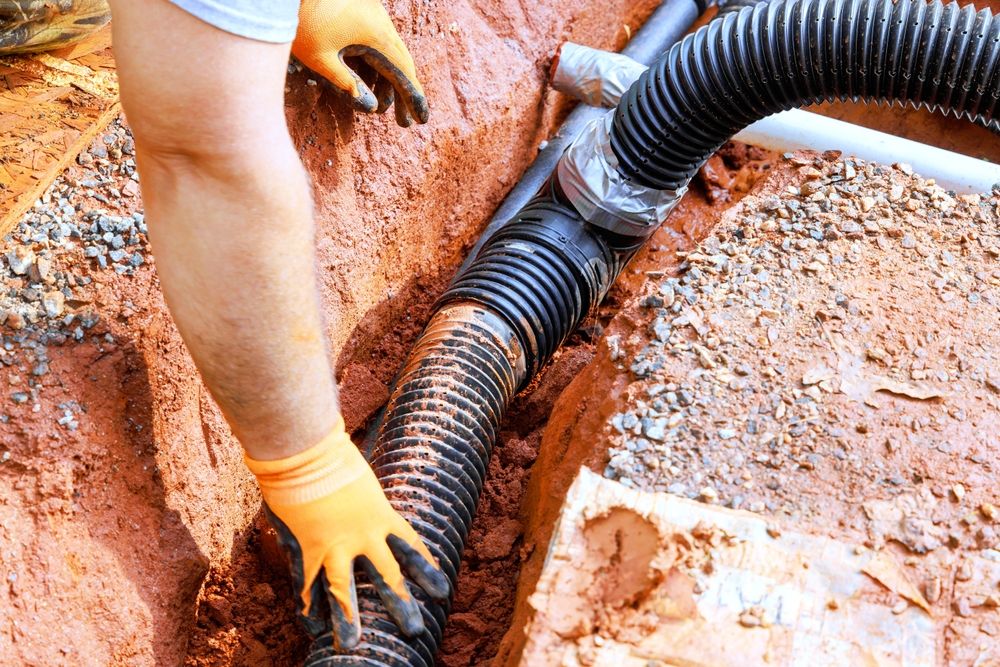
Surface drainage uses graded landforms like swales or berms to guide water across the top of the ground toward an outlet. Subsurface drainage uses buried pipe or aggregate channels to carry water beneath the surface when the grade or site constraints make surface routing impractical. Many properties in Ardmore benefit from a combination of both approaches depending on where water is collecting and what outlets are available at the property edge.
How does grading work interact with existing landscaping or hardscape?
Any grading that adjusts surface elevation near planted areas, retaining walls, or paved surfaces has to account for how those features will be affected by the new grade. Plantings may need to be temporarily relocated, and hardscape edges may require adjustment so water does not pool against them after the surrounding ground is regraded.
What does the yard look like once grading and drainage work is finished?
The most visible change is that low spots and pooling areas are gone, replaced by a surface that reads as consistently sloped or level depending on the design. Erosion channels in planting beds and lawn areas stabilize once water is moving along controlled routes rather than cutting its own path across unprotected soil.
McCarley Services approaches every grading and drainage project by reading the site first and recommending solutions based on what is actually happening with water movement on that specific property. Share the drainage issues you have been observing, and we will schedule a site visit to evaluate the conditions before any work is proposed.