
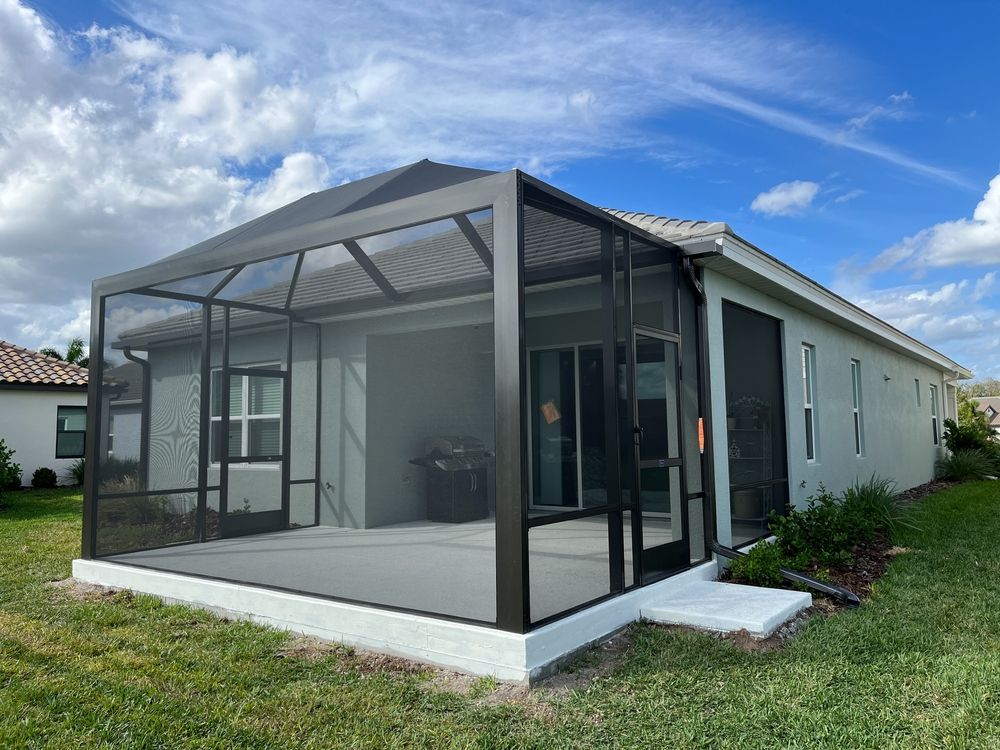
Screening That Keeps Outdoor Seating Usable
Porch screening in Ardmore for existing covered porches open to insects and poor airflow control
A covered porch with no screening is comfortable in principle but difficult to use in practice once insect activity picks up. McCarley Services installs porch screens for Ardmore homeowners who have an existing covered structure they want to use more consistently—converting open-air porches into enclosed seating areas that maintain airflow and outward visibility while blocking insect entry. The result is a porch that gets used during the months it would otherwise sit empty.
Fitting screens to an existing porch requires working within the frame dimensions already in place—post spacing, beam height, and floor-to-ceiling clearance all shape what screen panels will look like and how they are secured. Screen material selection matters here: fiberglass mesh and aluminum mesh perform differently in terms of visibility, durability, and how well they hold their shape in a frame over time. Framing approach—whether screens are set in removable panels, fixed sections, or a combination—depends on the structure's existing layout and whether ventilation needs to be adjustable.
Request a porch screening estimate from McCarley Services based on your existing porch dimensions and how you plan to use the space.
What Proper Porch Screening Requires
The most common failure point in porch screening is not the screen material itself but how the frame is constructed and how the screen is tensioned within it. Screens that are set loosely in their frames sag within a season and allow gaps at corners and edges—exactly where insects enter. A properly built screen section uses a frame with enough depth to accept spline and screen material in combination, with tension applied evenly across the panel before the spline is locked. The width of individual screen sections also affects performance; spans that are too wide without an intermediate support will bow outward under contact or wind load.
After installation, the porch functions differently in an observable way—conversations on the porch no longer require constant insect management, and the space holds its value as a seating area rather than something that gets abandoned after an hour. Airflow is maintained because screen mesh, unlike solid panels, allows wind through while blocking the insects that make outdoor use impractical.
Usable access points require deliberate planning. A screened porch with no proper door—or with a door that doesn't latch or self-close—defeats the purpose of the enclosure. McCarley Services integrates screened door hardware with the rest of the installation so that entry and exit don't create persistent openings in the enclosure.
Answers About How the Work Is Done
Porch screening projects involve specific framing, material, and sequencing decisions that homeowners often haven't considered before. The questions below address what actually goes into getting a screened porch right.
What screen mesh material holds up best in a framed porch panel?
Fiberglass mesh is more flexible and resists corrosion, making it easier to work with and less prone to denting than aluminum. Aluminum mesh is stiffer and more tear-resistant but can oxidize over time depending on where it is installed and what it contacts regularly.
How does post spacing on an existing porch affect the screening layout?
Wider post spacing requires either larger individual screen panels—which need more robust framing to avoid sagging—or intermediate framing members added within the bay to reduce the unsupported screen span. The existing structure determines which approach is necessary.
Why does screen tension matter after installation?
Screen that is under-tensioned will bow, wrinkle, or pull away from the spline channel, creating gaps at the edges. Proper tension is set during installation and locked in with spline so the panel holds its shape across the full face of the frame.
What makes a screened door work correctly as part of a porch enclosure?
The door needs to be sized to the opening, hung plumb, and equipped with a self-closing hinge and a positive latch so it seals consistently after each use. A door that swings freely without latching will leave the enclosure open most of the time it is in use.
How does screening affect visibility and light on a covered porch?
Standard fiberglass mesh at typical densities allows clear outward sightlines at normal viewing distances while reducing glare. The porch reads as open visually while functioning as an enclosed space for insect exclusion.
McCarley Services sizes and installs porch screens based on your existing structure's framing dimensions and how you intend to use the enclosed space. Contact McCarley Services directly to arrange an on-site review of your porch and discuss the screen material and panel layout that fits your setup.